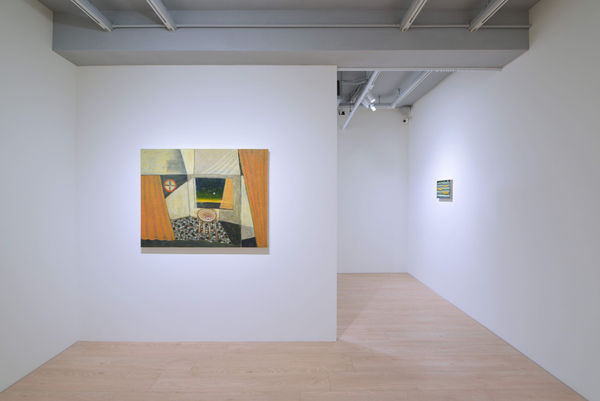
Hippocampal Overflow

■ 地點 Venue | 大河美術 RIVER ART GALLERY
大河美術將推出群展《Hippocampal Overflow》,參與藝術家來自不同文化與世代背景, 包括美籍日粵裔藝術家 Michael Rikio Ming Hee Ho、英國藝術家 Penny Davenport、臺灣藝術家 RayHan、美籍日韓裔藝術家 ShingoYamazaki,以及加拿大籍臺裔藝術家 Yi- Shuan Lee,集體構築一則關於記憶失效、感知過載與自我安置的當代寓言,與我們共同提出這場時代診斷。
《Hippocampal Overflow》源自對當代藝術家創作狀態的長期觀察。回顧過去一年,從引發全球震盪的關稅貿易戰、戰爭與安全危機、東亞地緣政治的變動,到更貼近我們日常生活的 AI 經濟狂熱、社群媒體管制與禁令,以及年末令人遺憾、深刻撼動臺灣社會的攻擊事件——皆同時指向一種普遍而迫切的現實處境:我們正生活在一個資訊極速運轉、數位訊號無限疊加,情感與認知頻繁失衡的世界。當既有的集體敘事逐漸失效,荒誕如電影般的情節,或邏輯斷裂、難以言說的夢境,成為日常經驗的一部分。人們被迫退回更為私密的層次,從零散的感知、破碎的記憶與殘存的符號之中,嘗試重新編織意義,為自身尋找一處得以暫時安放的所在。
「Hippocampal」一詞來自人腦中負責連結記憶、情緒與空間感知的關鍵區域——海馬迴(Hippocampus)。它能在瞬間整合事件與感受,並於休息與睡眠中反覆重播日常經驗, 使記憶得以沉澱與轉化。其詞源結合了希臘語中「馬(hippos)」與「海妖(kampos)」的意象:半人、蛇形、尾如蠍——一種介於真實與虛幻之間的存在,既靜謐,也潛藏危險,如同夢境本身。如今這套記憶與情感系統,正承受前所未有的壓力。數位技術的高度介入,使人類與人工智慧的記憶彼此交錯;戰爭、移民與疫情的長期創傷,使集體情感徘徊於保存與流失之間;身分邊界持續被拆解與重組,氣候災難則迫使人類與萬物共享的記憶系統一同顫動、崩解。當海馬迴過載,短期記憶無法轉化為長期儲存,潛意識開始失序,現實與想像的界線逐漸模糊——幻想不再只是逃避的場所,而是溢出於現實之中,成為我們每日生活的鏡像。
《Hippocampal Overflow》中,展出藝術家以各自獨立卻彼此呼應的方式,在回望童年與神話,修補斷裂的集體想像層面;或透過動物與自然的凝視,映照人性的脆弱與矛盾; 甚至是將語言、物件與形式轉化為情感的容器,在文化漂流的狀態中尋找暫時的庇護等,回應了這種過剩現實所帶來的心理狀態。本展既是一種集體的神經反應,也是一場對記憶的修復行動。當第一層記憶系統宣告失效,藝術或許成為另一種持續記錄和對話,保留生存的可能。
大河美術此次選擇將邀請轉為開放,只因一個已然成形的現實——你我早已身處熟悉崩塌的敘事情境之中。當「海馬迴過載」被反覆宣告為我們的時代病徵,該如何自我救贖? 走進現場,與藝術家們一同從殘存的片段中重組意義,創造一則屬於自己與當下的神話。
RIVER ART GALLERY will present the group exhibition “Hippocampal Overflow”, featuring artists from various cultural and generational backgrounds: Michael Rikio Ming Hee Ho, a Cantonese and Japanese American artist; British artist Penny Davenport; Taiwanese artist Ray Han; Japanese and Korean American artist Shingo Yamazaki, and Taiwanese Canadian artist Yi-Shuan Lee. The exhibition weaves a contemporary allegory about memory failure, sensory overload, and self-settlement, presenting a diagnosis of the era.
“Hippocampal Overflow” is derived from long-term observation of the creative states of contemporary artists. Looking back over the past year, from the tariff trade war that sent shockwaves around the globe, to conflicts and security crises, shifts in East Asian geopolitics, and closer to home —the AI economic frenzy, social media regulations, last but not least, the regrettable attack at the end of the year that profoundly shook Taiwan's society. All of these point to a common and urgent reality—we are living in a world of accelerated information flow, where digital signals accumulate without pause, and emotional and cognitive imbalances occur with alarming frequency. As established narratives lose efficacy, absurd, cinematic scenarios or illogical, indescribable dreams become part of everyday experience. Individuals are compelled to retreat to more intimate levels, attempting to reassemble meaning from fragmented perceptions, fractured memories, and residual symbols—seeking a space of temporary anchorage and solace.
The term “hippocampal” originates from hippocampus, a critical component of the human brain responsible for linking memory, emotion, and spatial perception. Capable of instant synthesis, it continuously replays lived experience during rest and sleep, allowing memory to settle, reorganize, and transform. Its etymology combines the image of hippos (horse) and kampos (sea monster) in Greek: half-human, serpentine, with a scorpion’s tail—a hybrid being existing between reality and illusion, serene and perilous, much like dreams themselves. Nowadays, this system of memory and emotion is under unprecedented strain. The deep entanglement of digital technologies has interwoven human memory with artificial intelligence; prolonged trauma caused by war, migration, and pandemics has left collective emotions suspended between preservation and erasure; and the boundaries of identity continue to be dismantled and reconfigured. Meanwhile, climate disasters compel the memory system that humanity shares with all living beings to tremble and collapse. When the hippocampus becomes overloaded, short-term memory fails to consolidate into long-term storage, the subconscious begins to lose order, and the boundary between reality and imagination blurs—fantasy no longer functions as escape; it overflows into reality, mirroring the conditions of everyday life.
In “Hippocampal Overflow”, the participating artists respond to this psychological state shaped by an excess reality through distinct yet resonant practices. Some revisit childhood and mythology to mend fractured layers of collective imagination; others reflect human vulnerability and contradiction through encounters with animals and the natural world. Language, objects, and formal structures are transformed into emotional containers, while gestures of retreat and drift suggest provisional refuges within cultural displacement. Seen in this light, “Hippocampal Overflow” operates both as a collective neural response and as an act of memory restoration. When primary systems of remembrance falter, art may emerge as an alternative site of storage and connection—enabling continued documentation, dialogue, and the preservation of survival possibilities.
This time, RIVER ART GALLERY has chosen to transform the invitation into an open call, driven by an undeniable reality—we are all already immersed in a narrative landscape where familiarity crumbles. As “Hippocampal Overflow” is constantly declared the defining symptom of our era, how might we seek self-redemption? Step into the show and join the artists in reassembling meaning from the fragmented remnants, creating a myth that belongs to ourselves and the present moment.